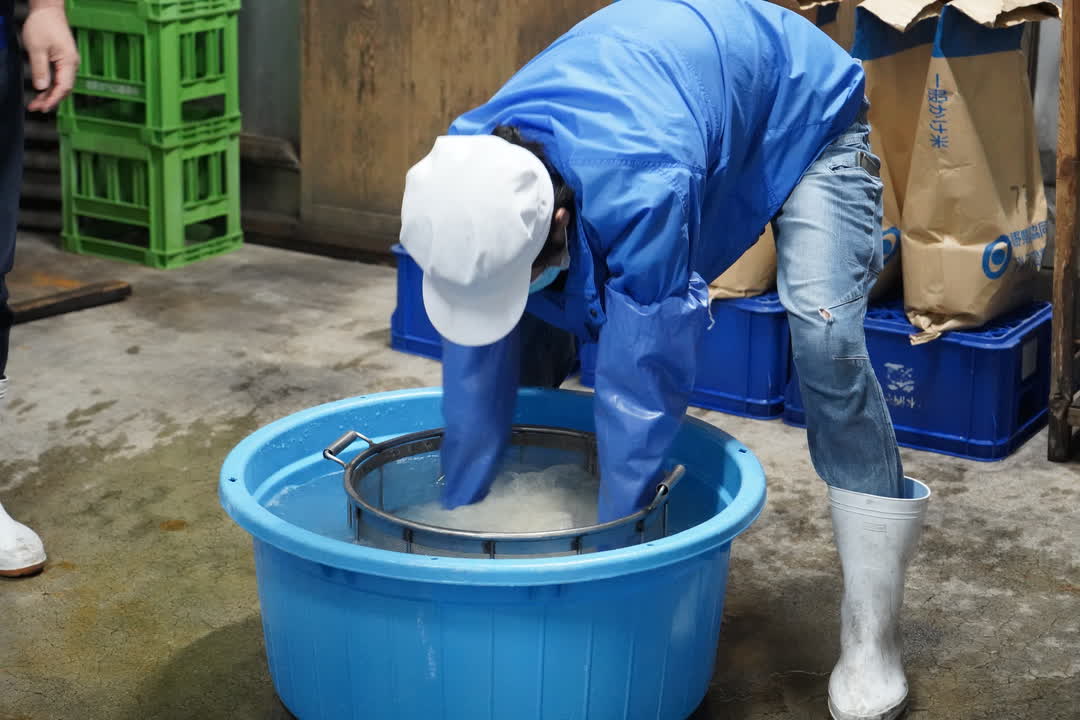
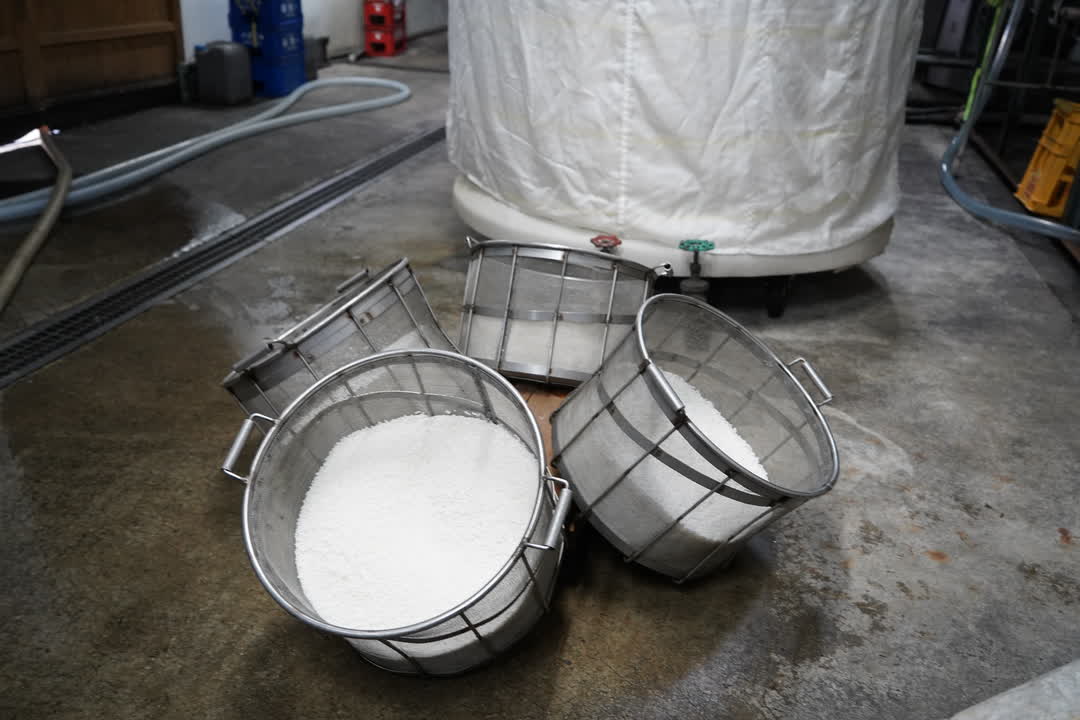
Polish the rice.
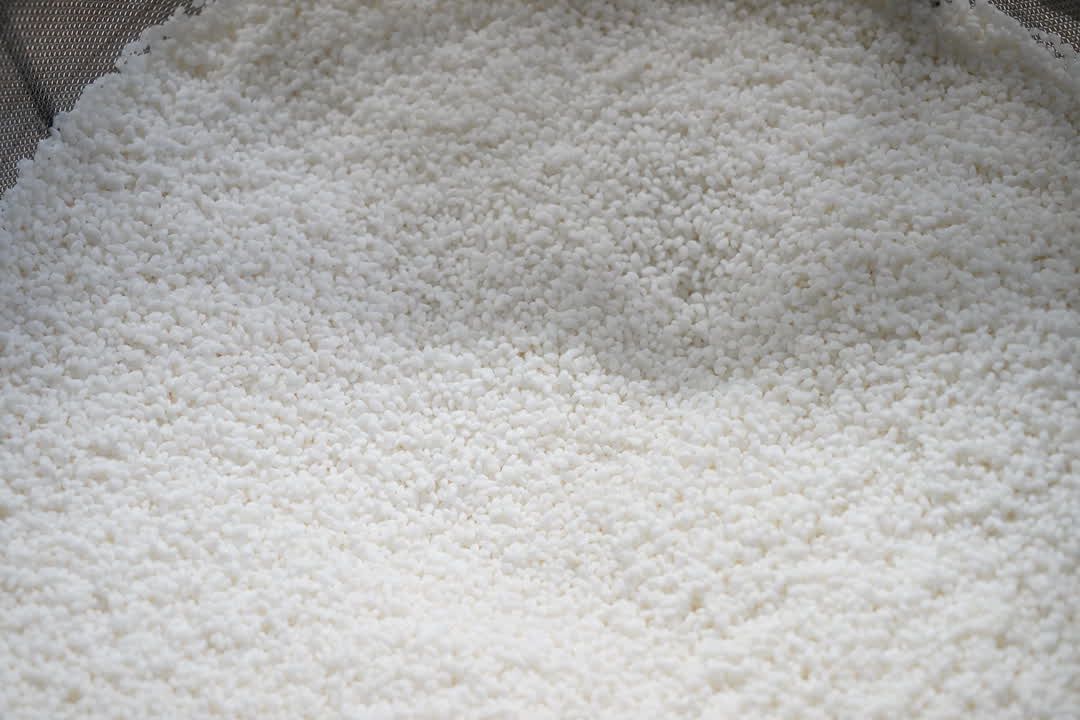
Half the grain can go before anything is brewed. Ginjo starts at 60% remaining, daiginjo at 50%.
Rice · polishing ratio 50–70% · 2–3 daysFrom the Kura · 雫 Shizuku, drop by drop
Shizuku sake isn't pressed. The mash hangs in cloth bags and drips under its own weight, a drop at a time. Brewers keep it for their best bottles. Twelve years in sake has felt a lot like that.
Rice to glass.
Rice to glass
Scroll, and the brew moves with you. Stop, and it holds.
Half the grain can go before anything is brewed. Ginjo starts at 60% remaining, daiginjo at 50%.
Rice · polishing ratio 50–70% · 2–3 daysAspergillus oryzae on steamed rice, about two days in the warm koji room. It makes the enzymes that turn starch into sugar.
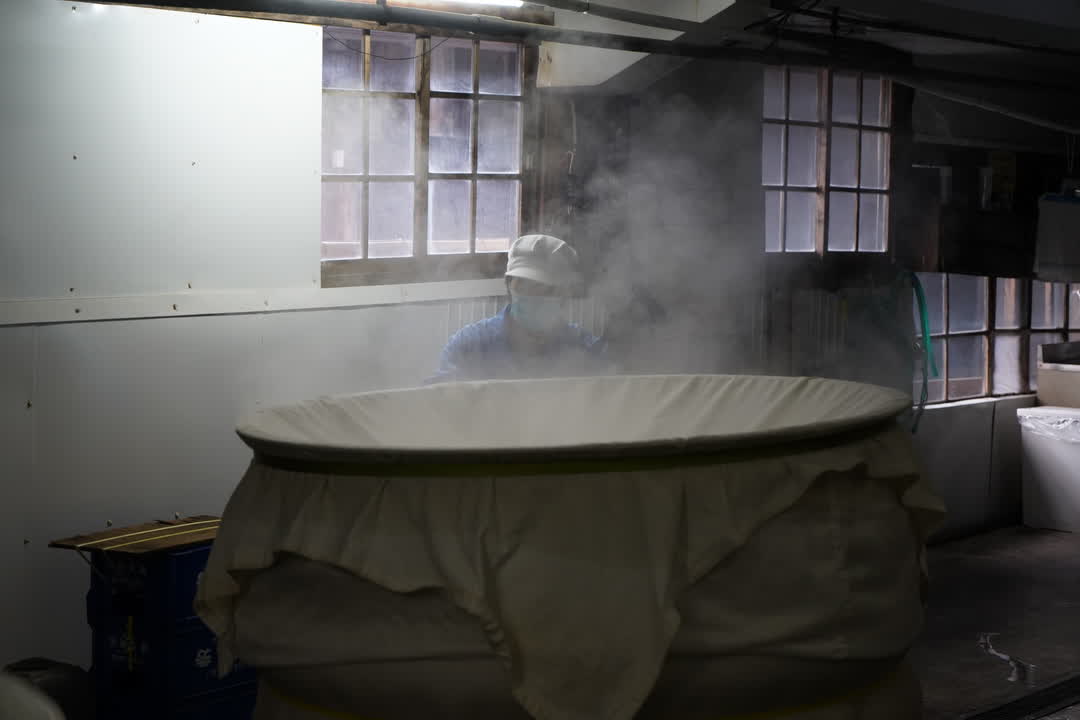
Koji-kin · 48 h · 30–40 °CRice is steamed in a koshiki so the outside stays firm and the inside turns soft. That texture is what the koji can work into.
Koshiki · 40–60 min · live steamKoji, steamed rice, water and yeast ferment together. Starch becomes sugar and sugar becomes alcohol in the same tank, over three weeks or more.
Moromi · 3–5 weeks · 5–15 °CThe mash is pressed to separate sake from the kasu. Slow in a fune, slower still drip by drip as shizuku.
Fune · yabuta · shizukuBlue rings on white porcelain show colour and clarity at a glance. This cup is the janome, and the motif of this site.
Janome · 180 ml · white porcelainSwirl, lift, decide. The glass changes what you smell, so the same sake tastes different from an ochoko, a wine glass and a masu.
Aroma · ginjo-ka · glasswareA modern kura keeps the temperature. The rest is still people: washing, steaming, stirring, tasting. That is where I learned it.
Tanks · 3,000–10,000 L · temperature controlledSaku, Nagano. October 2022.
Kitsukura · Saku, Nagano · October 2022
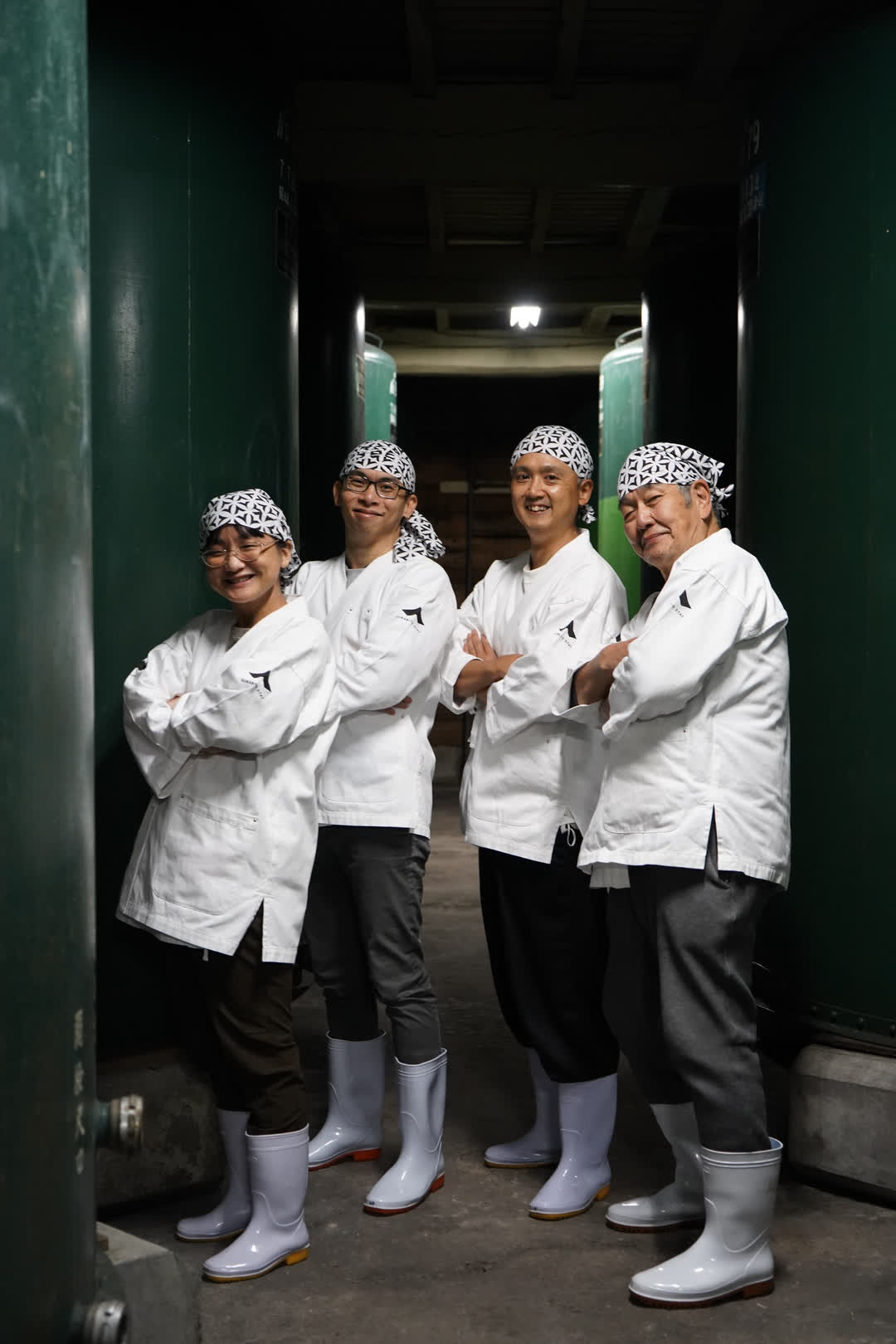
From the 7am morning routine to the making of the shubo. The fermentation takes months, so my part ended once the shubo was made.
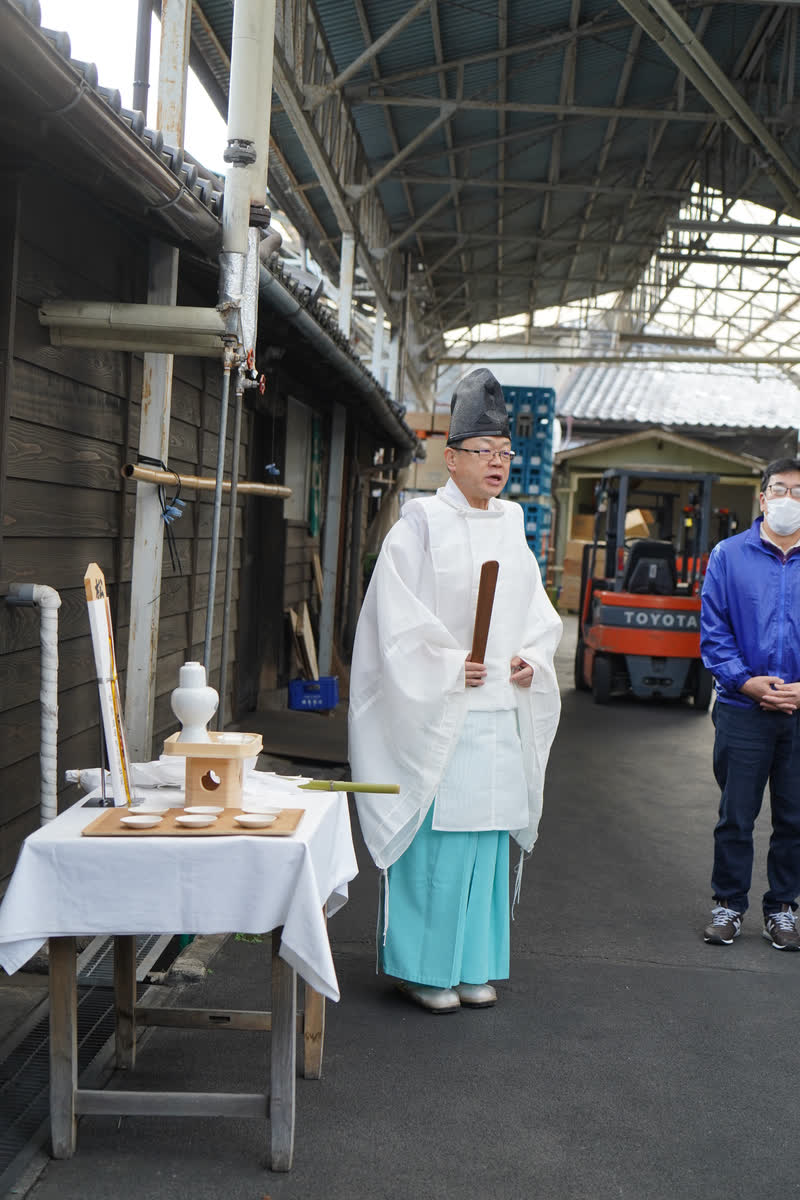
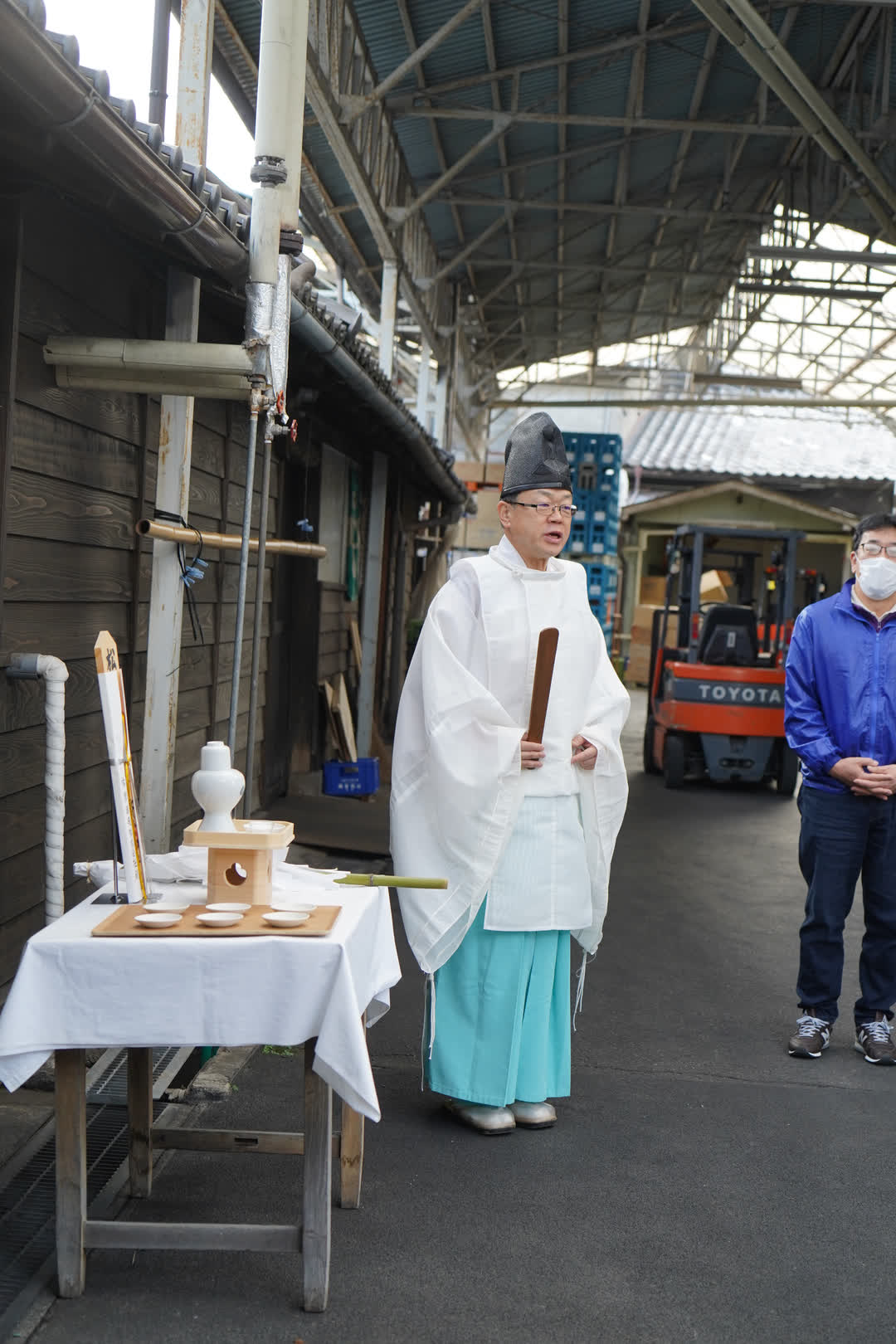
An altar in the brewery yard at Kitsukura in Saku, set out before the season’s first work.
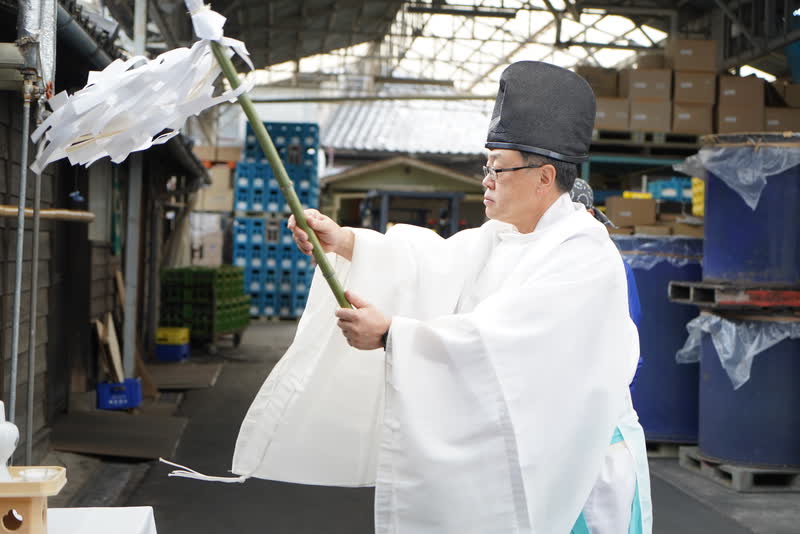
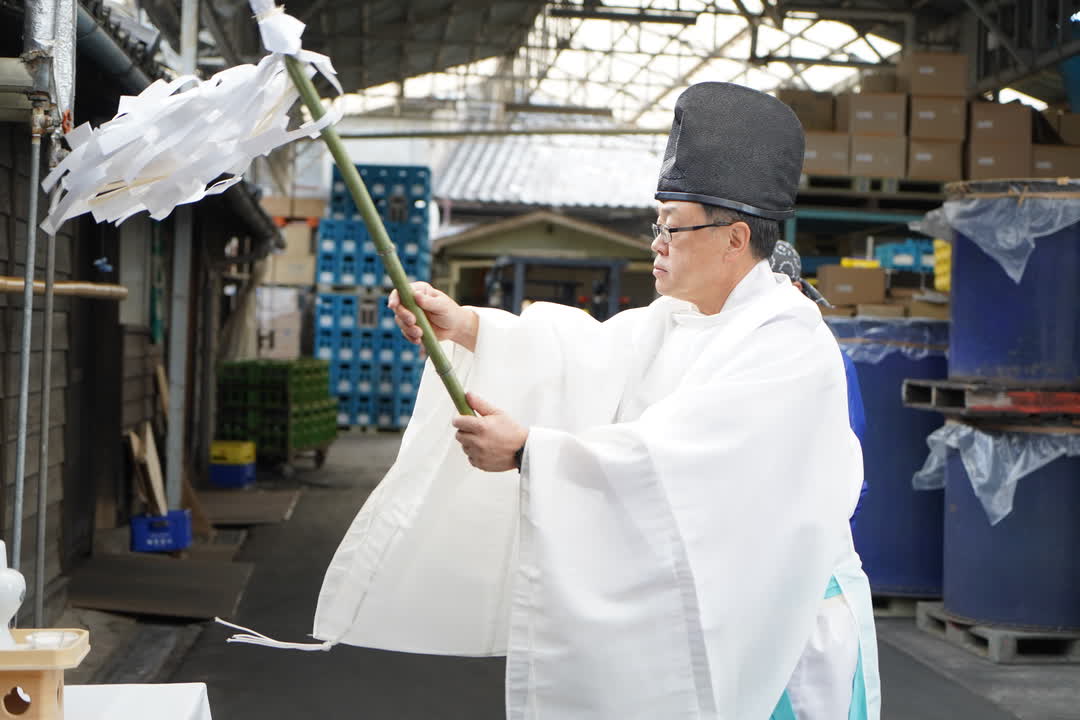
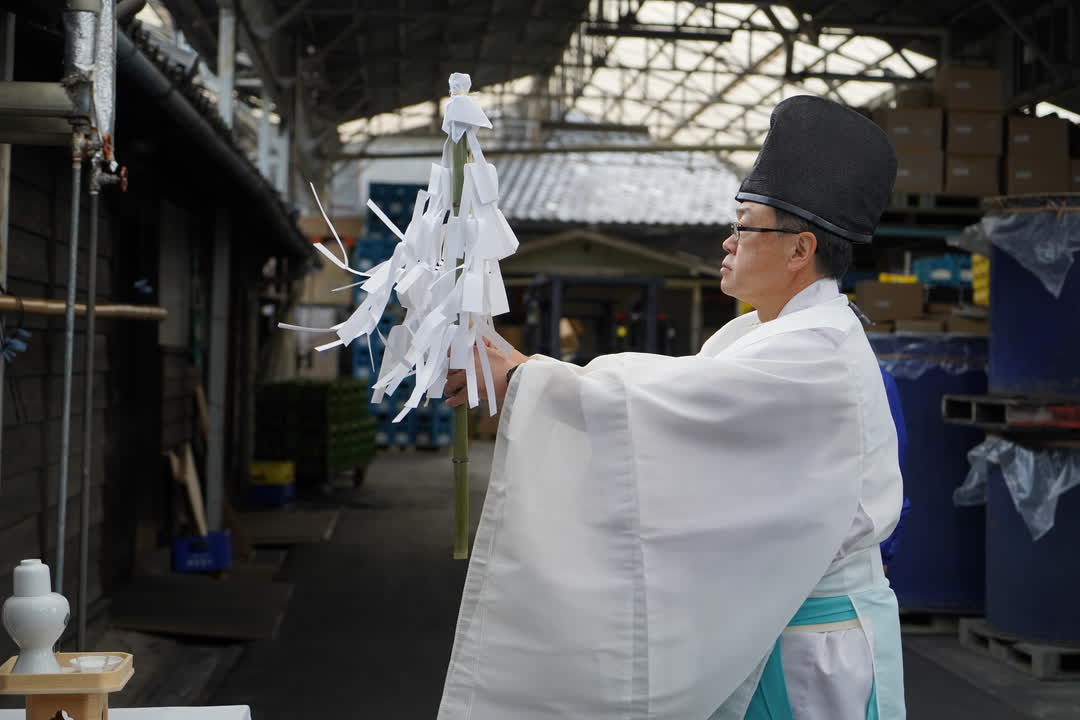
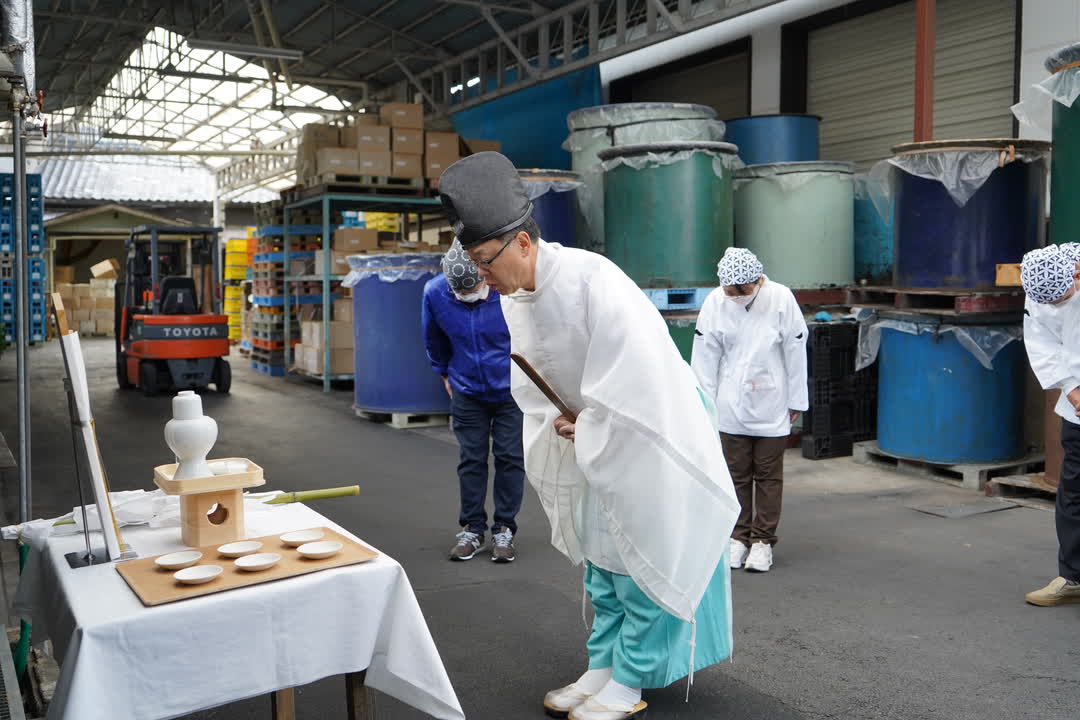
A Shinto priest blesses the kura, the tanks and the people before the first work of the season.
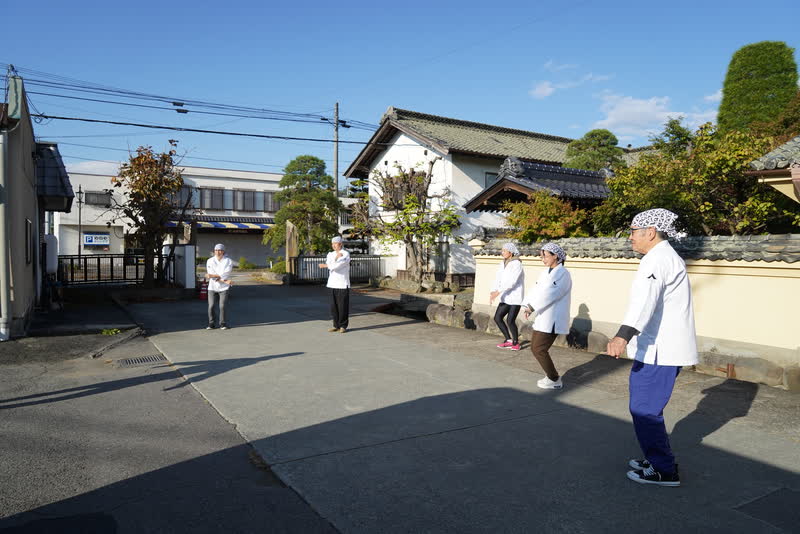
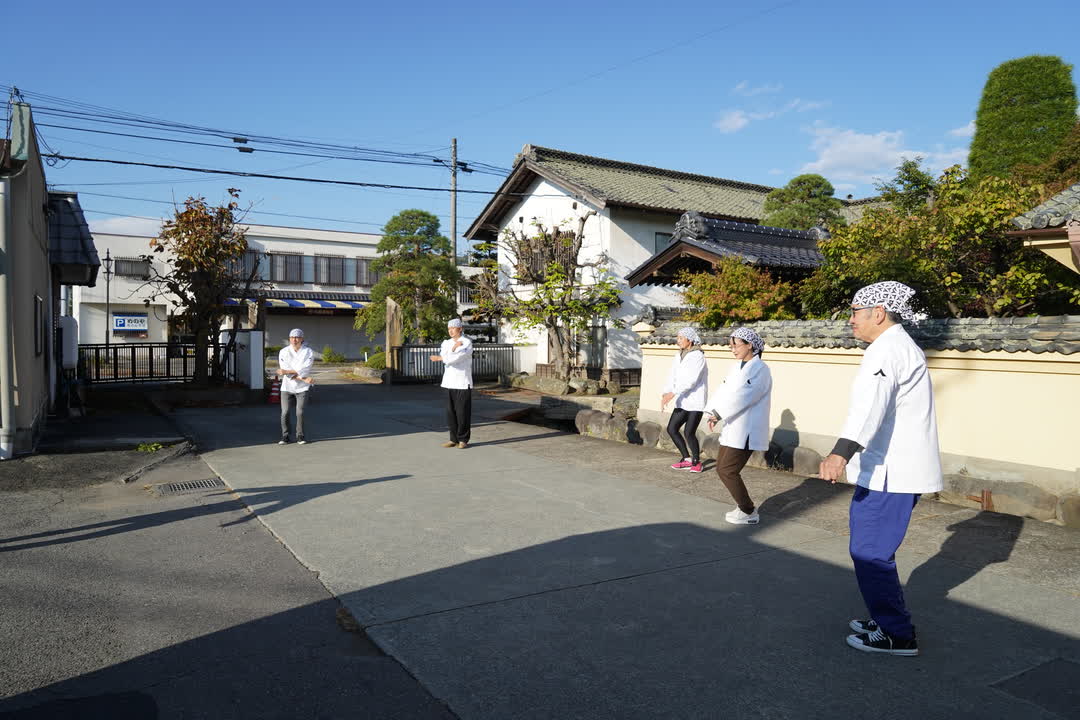
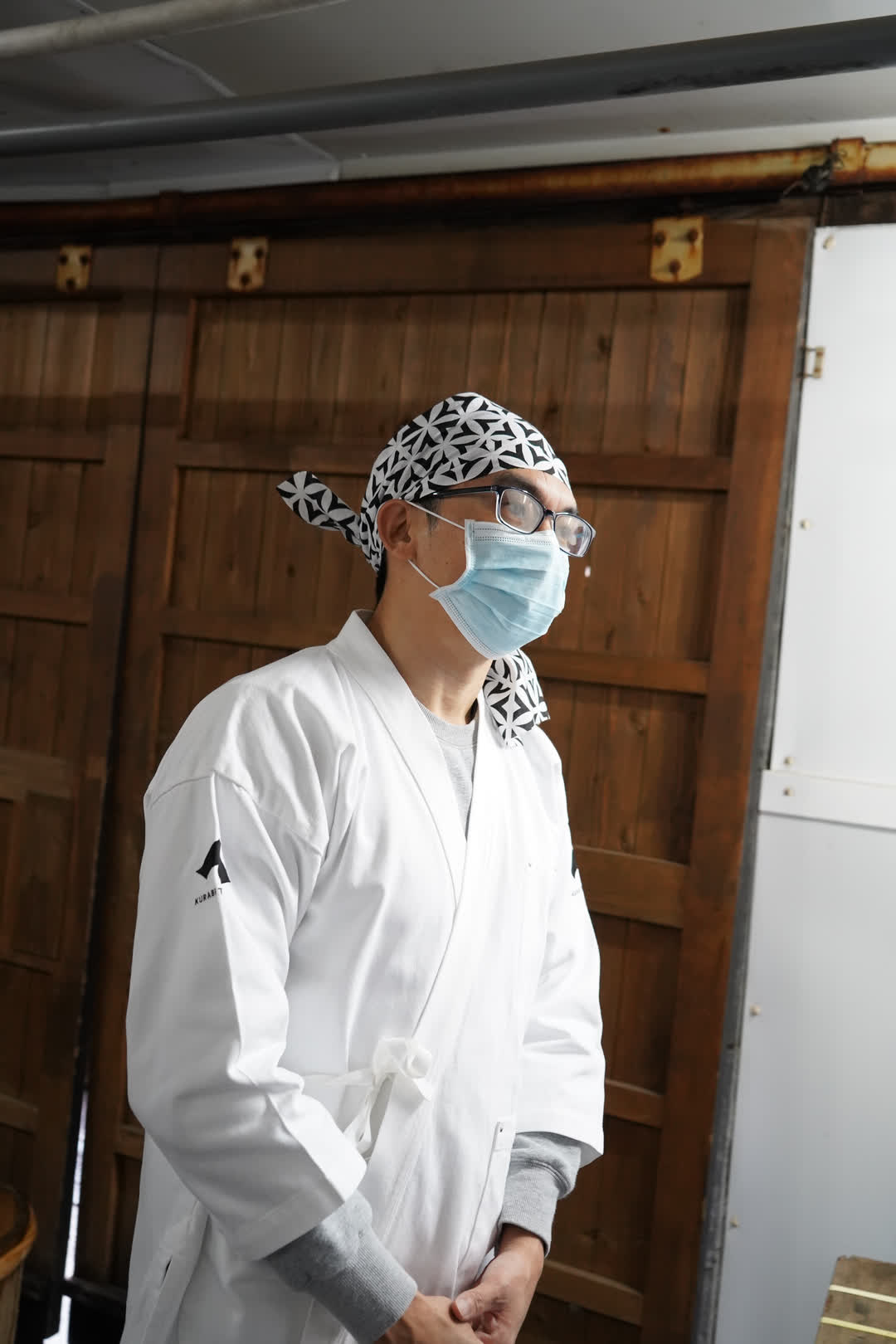
Breakfast and morning exercises with the whole brewing team, then a blessing before work begins.
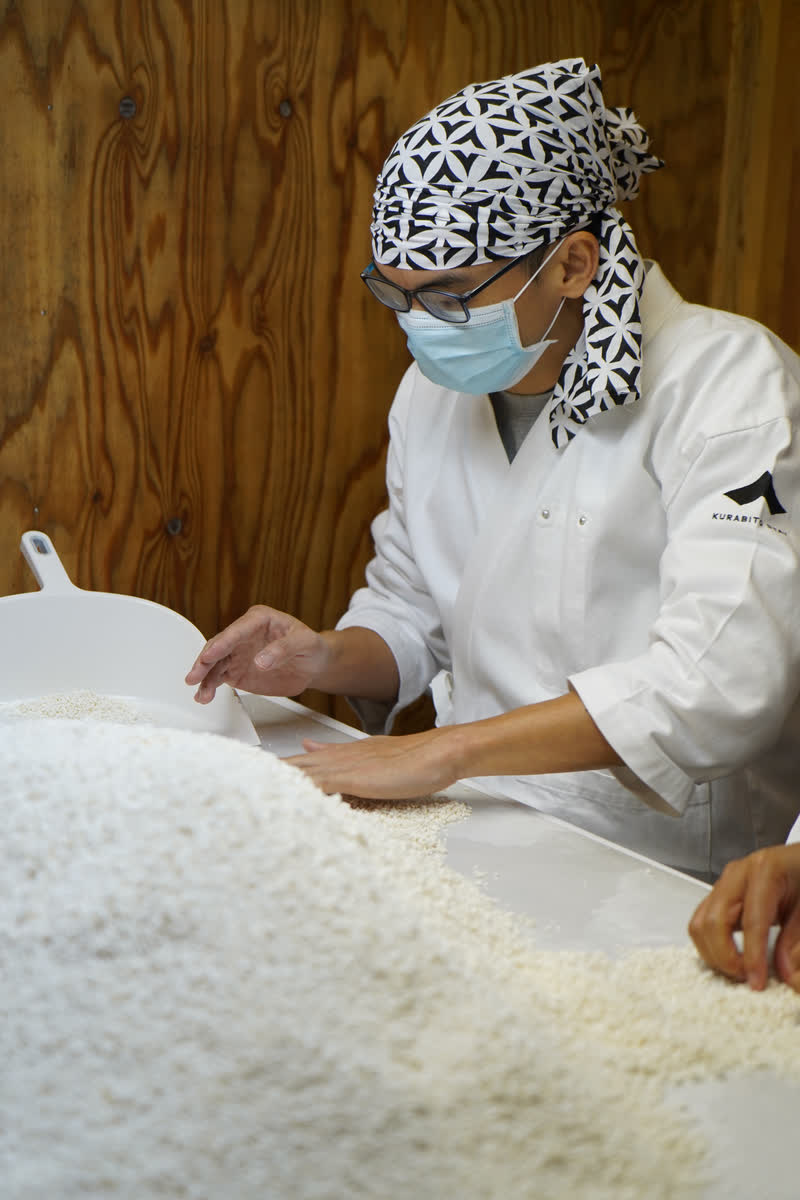
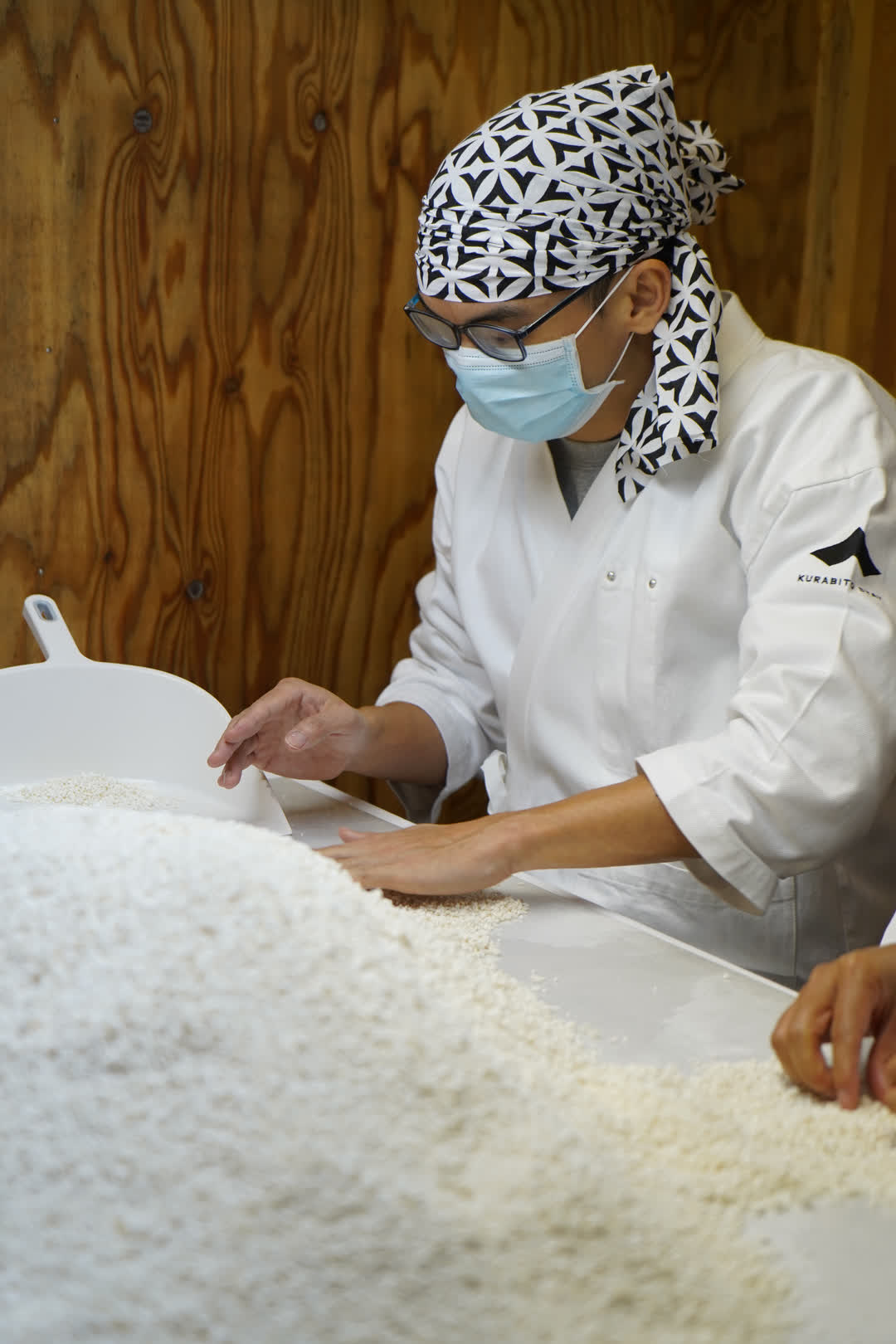
Polished rice, inspected before anything else: the polish, the moisture, whole grains against broken ones.
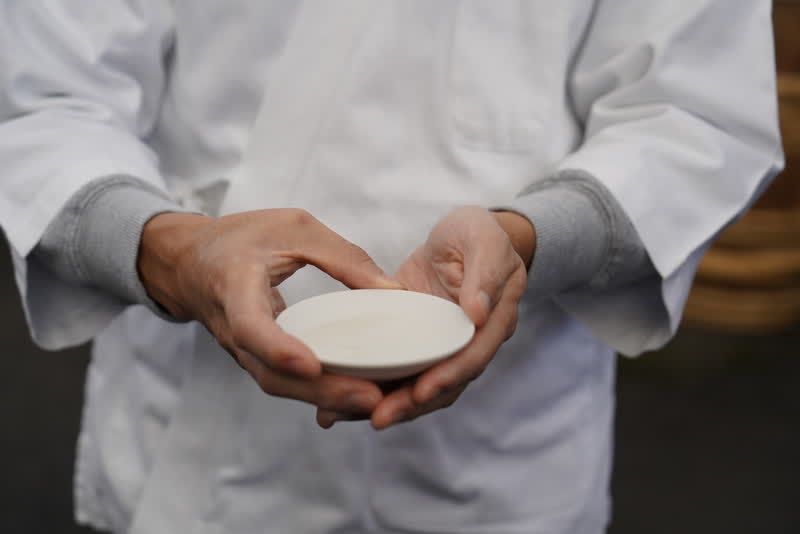
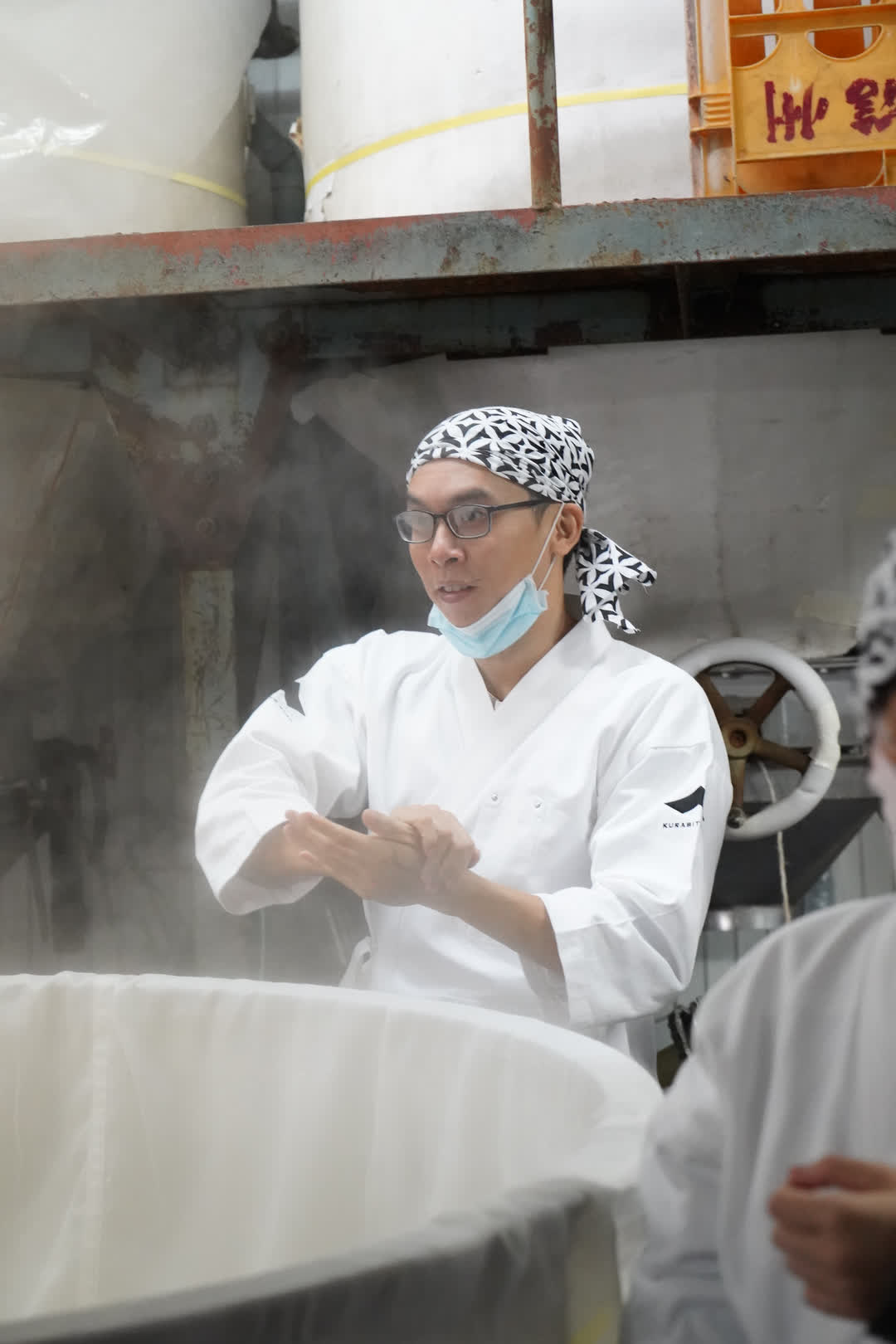
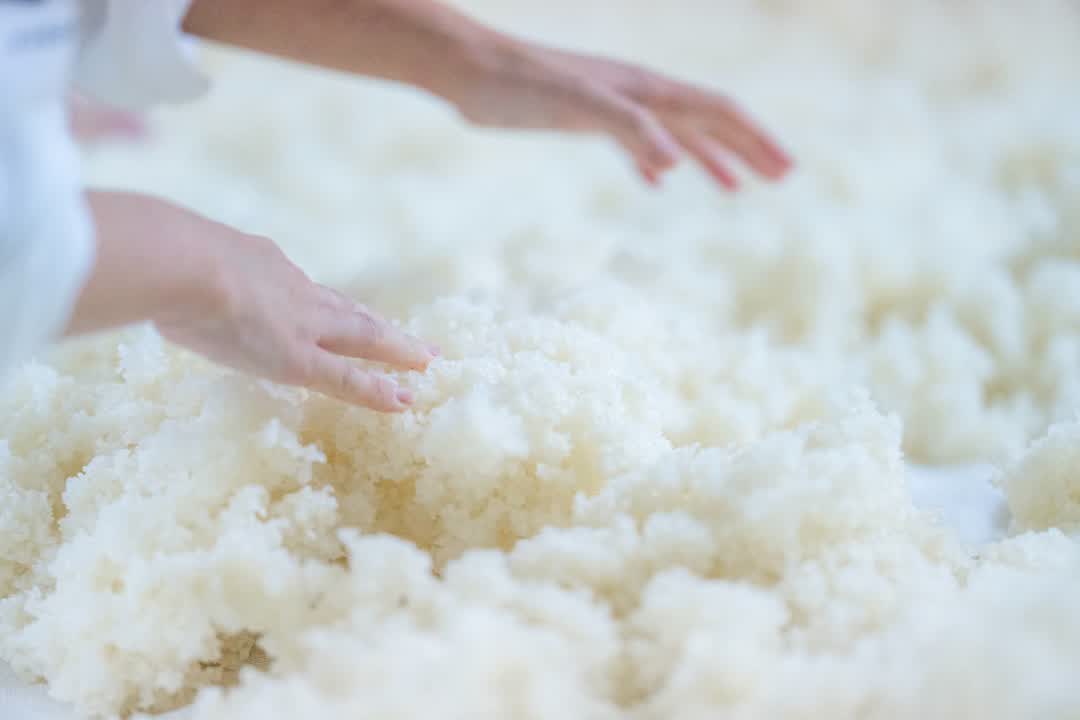
A pinch of steamed rice pressed flat between the fingers. Firm outside, soft inside, or the steam was wrong.
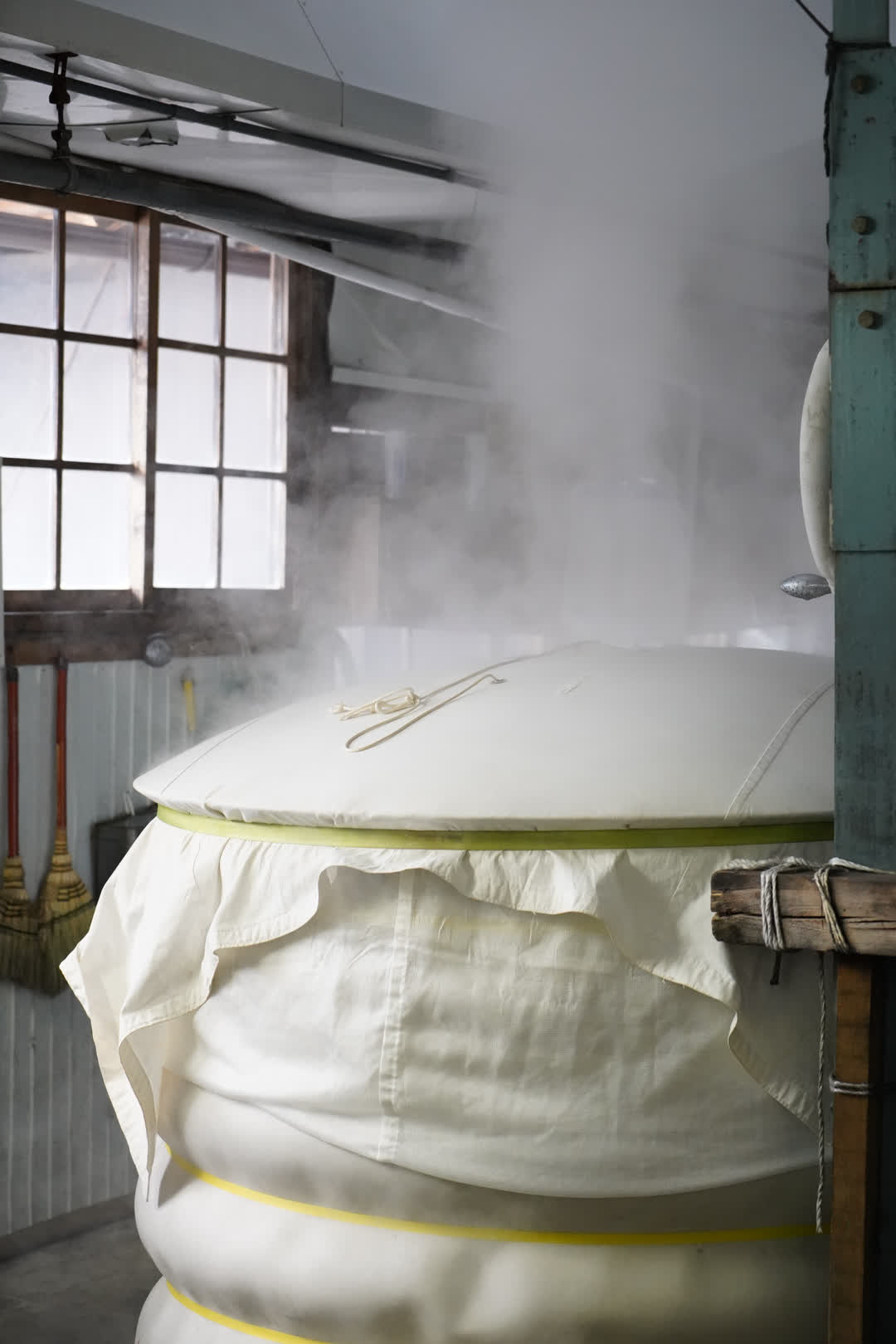
The lid comes off and the room disappears. What the steam did decides what the koji can do.
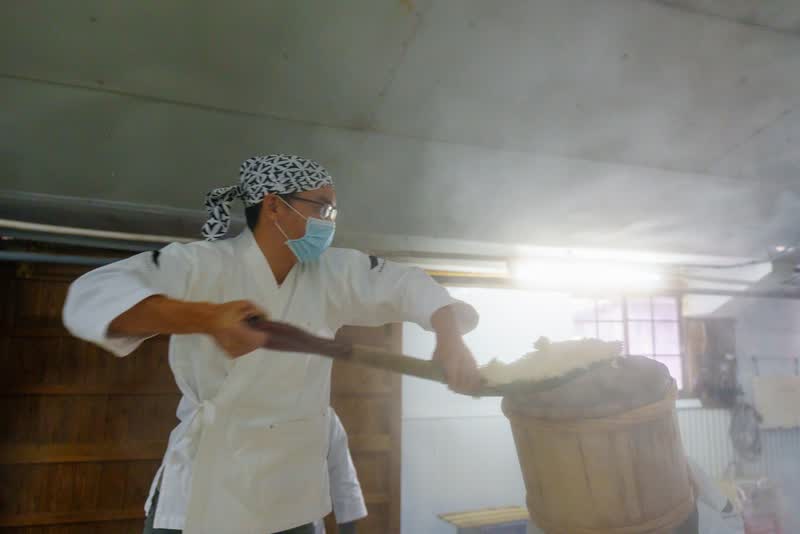
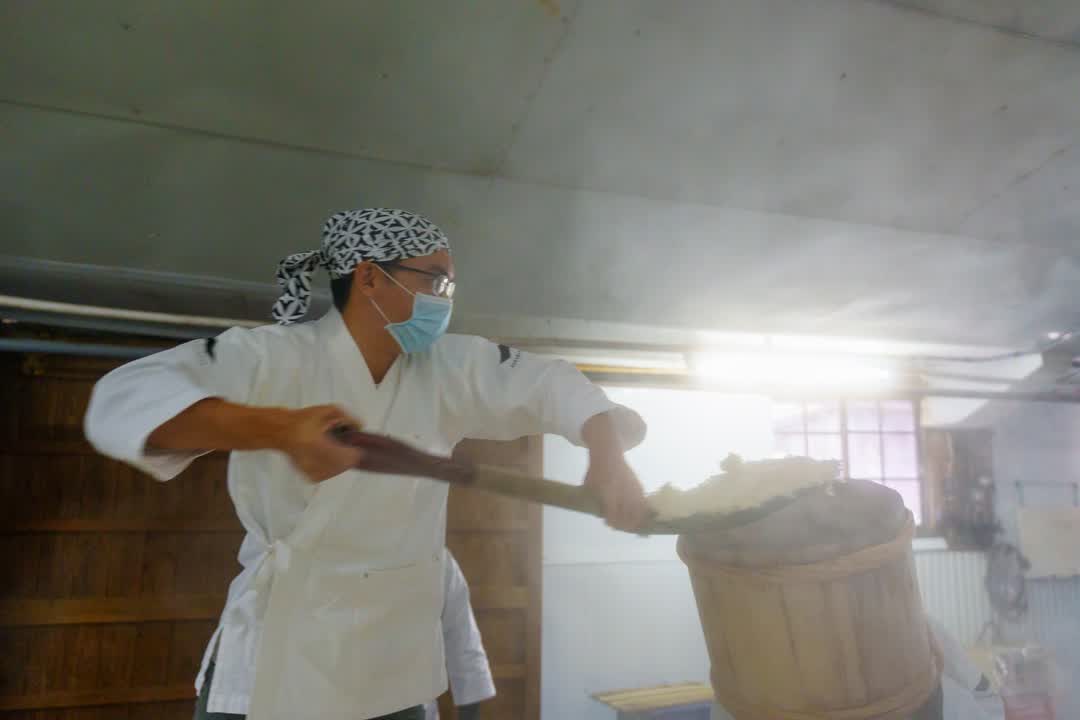
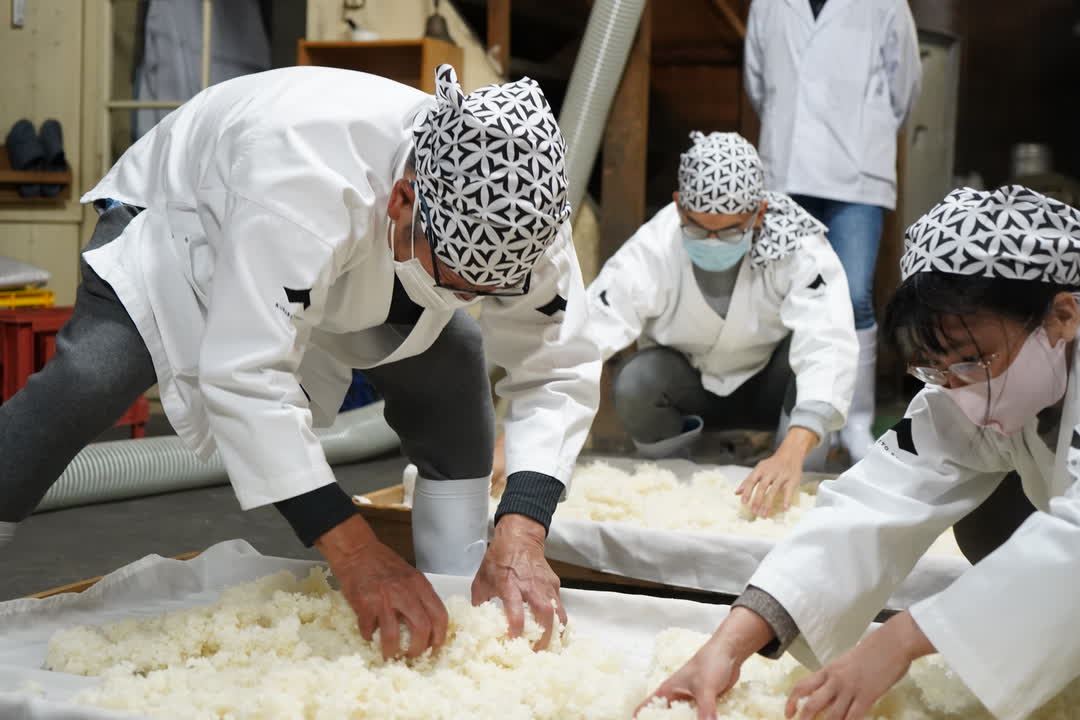
Steamed rice comes out of the koshiki with a wooden spade, and it has to move while it is still hot.
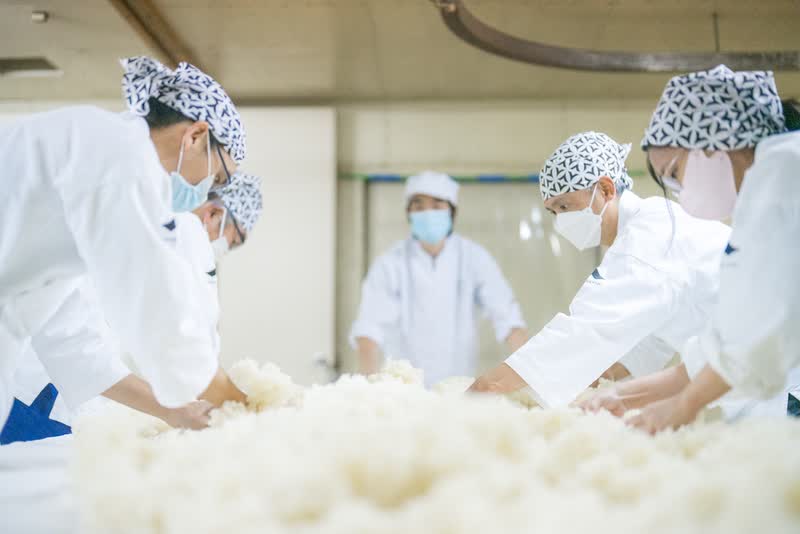
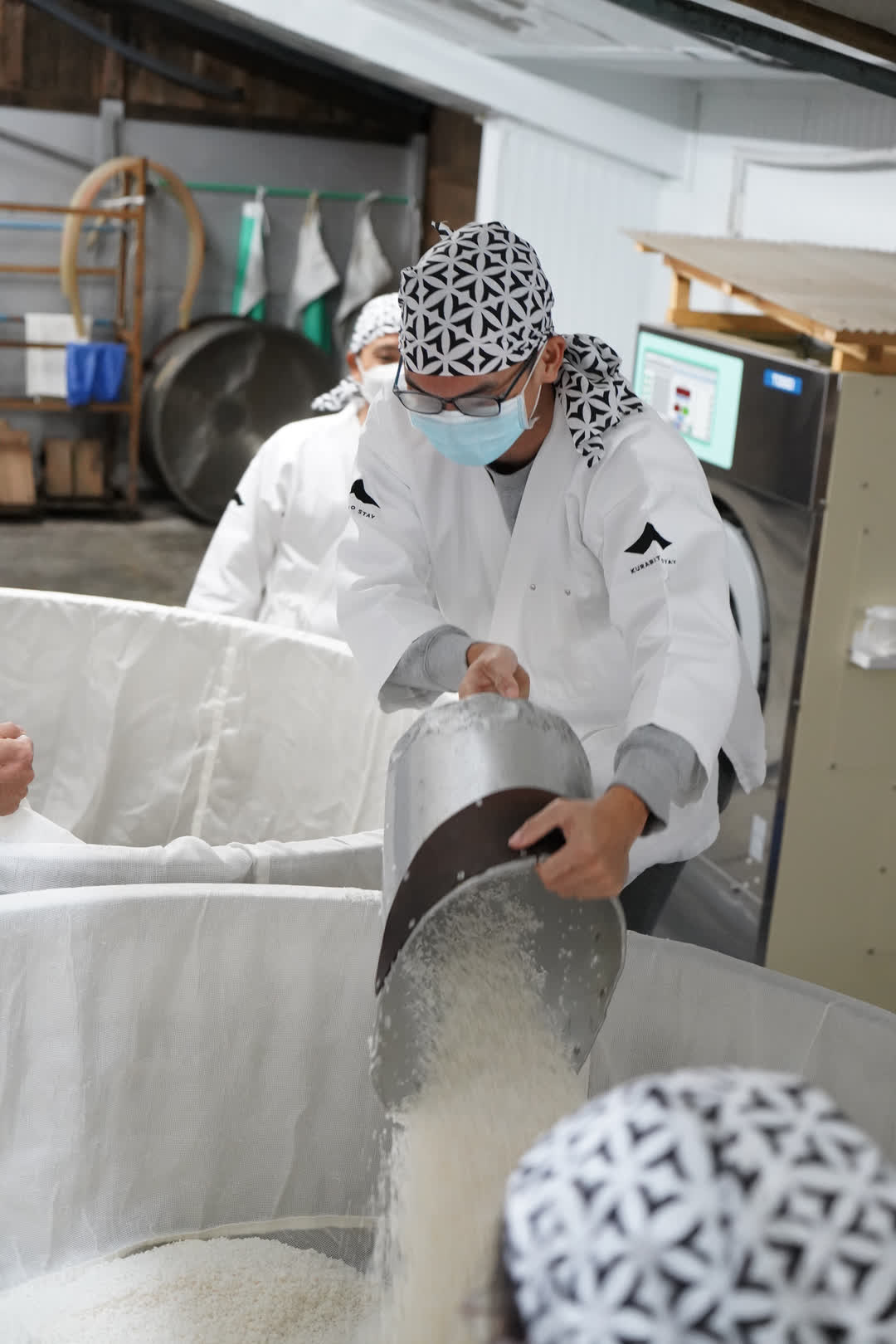
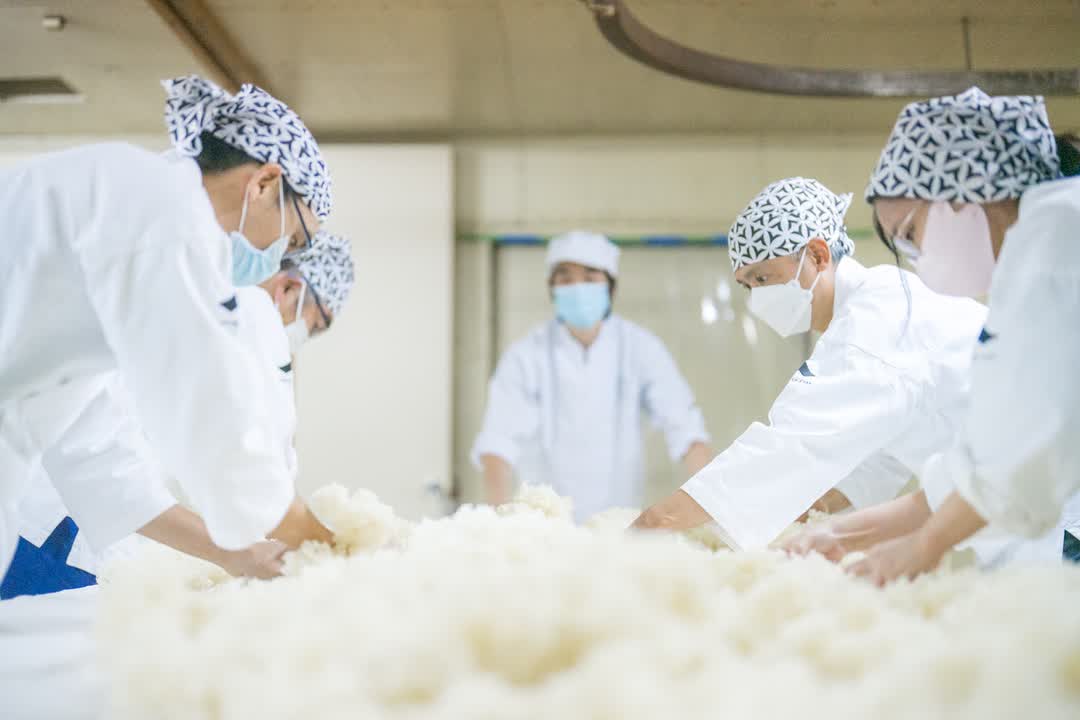
Steamed rice is broken up and spread across cloth to cool to the right temperature.
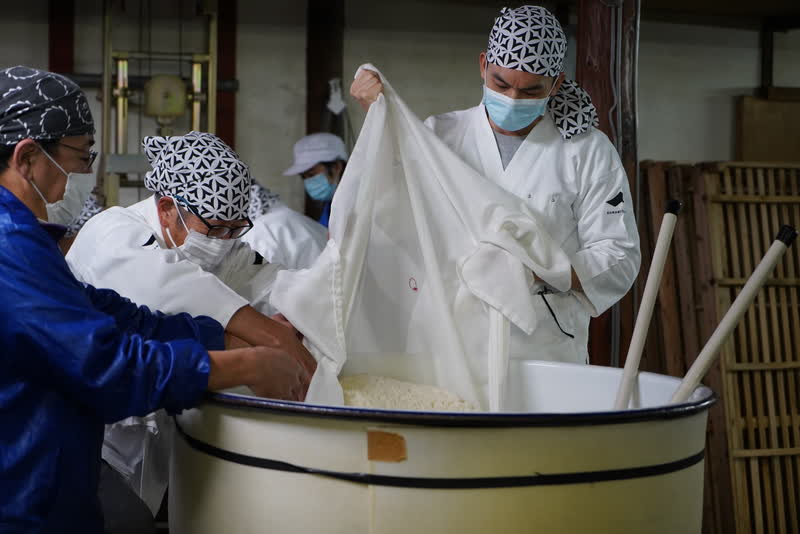
Koji rice rests wrapped in cloth, and the cloth comes off to check it. This is where sake’s sugars begin.
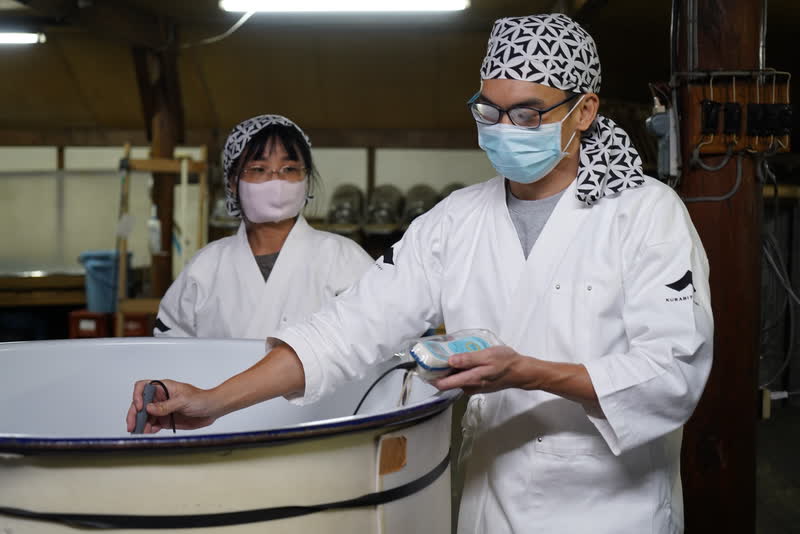
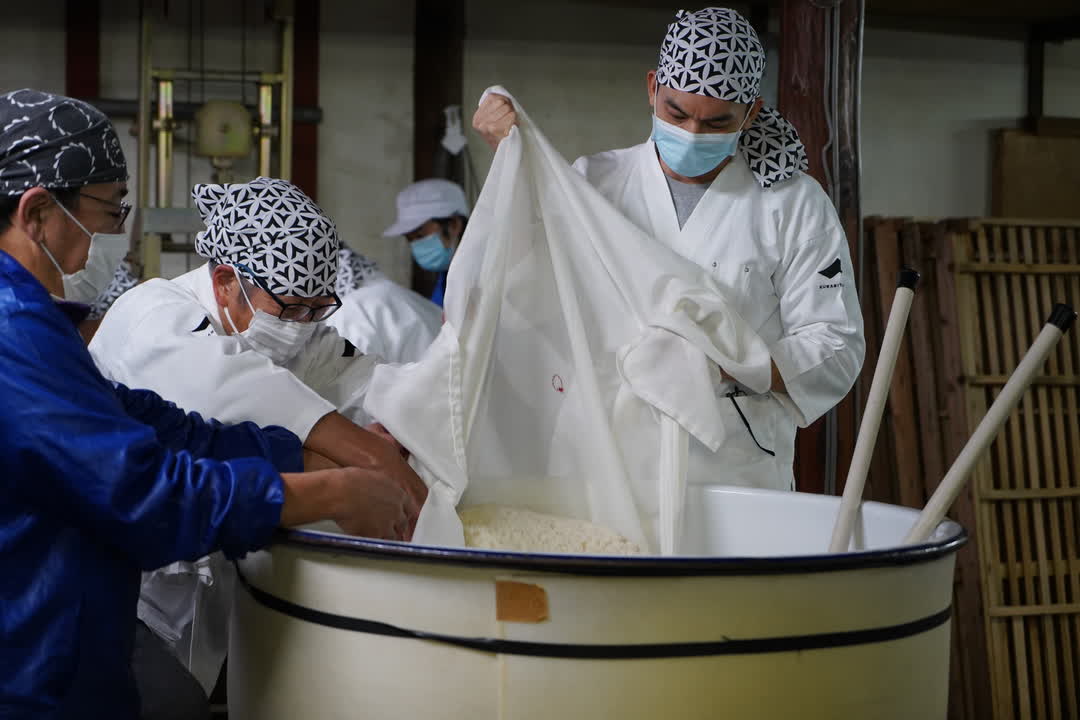
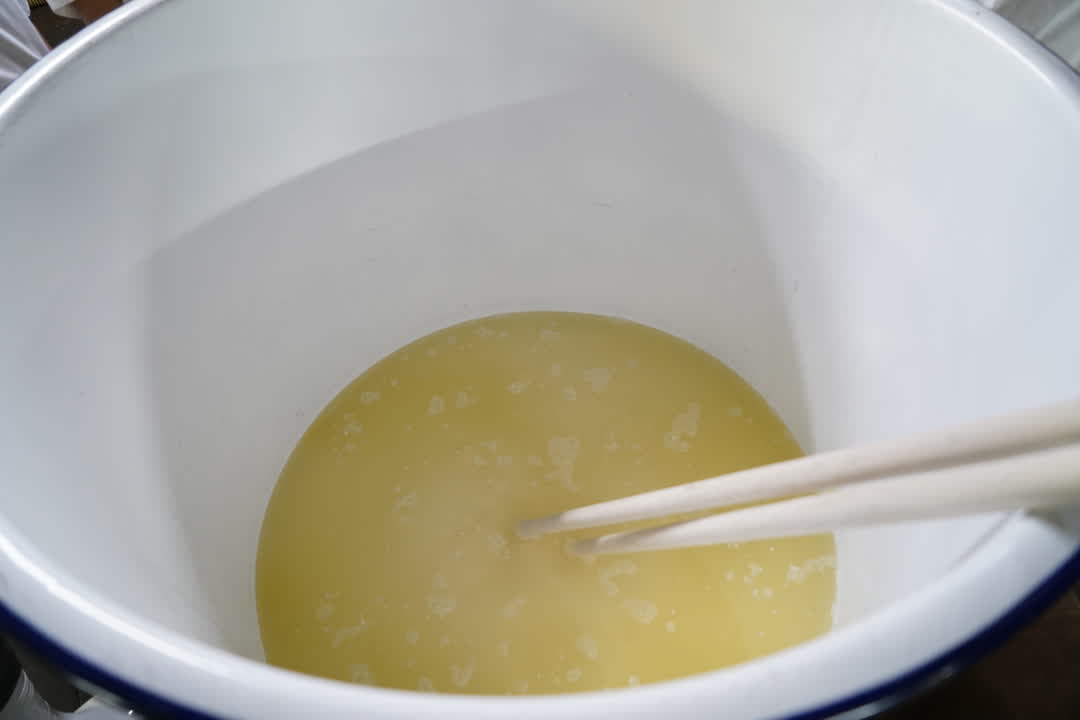
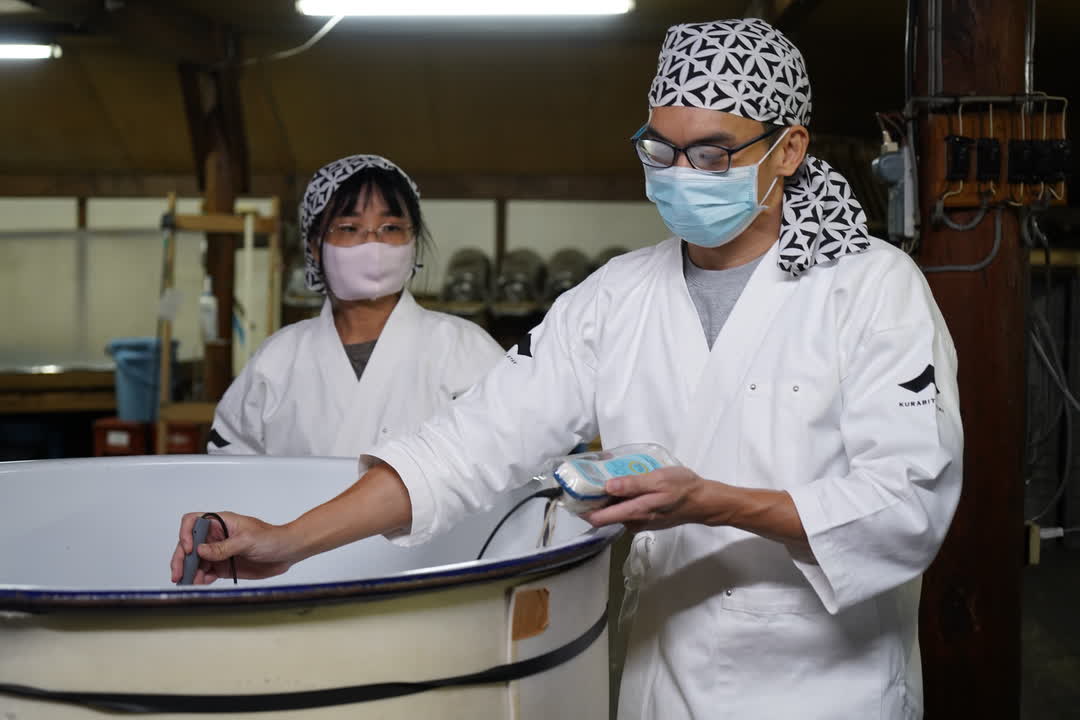
Koji, steamed rice, water and yeast come together as the shubo, the starter that carries the whole batch. The thermometer is the whole conversation.
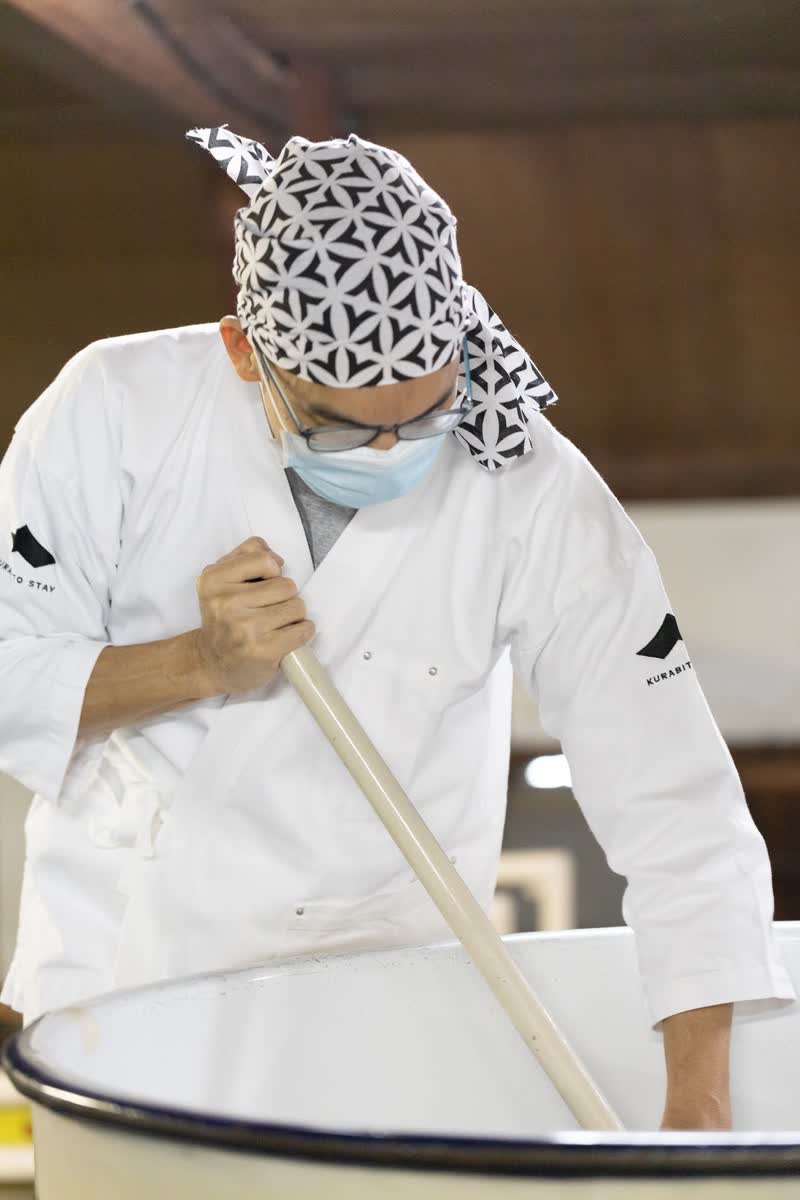
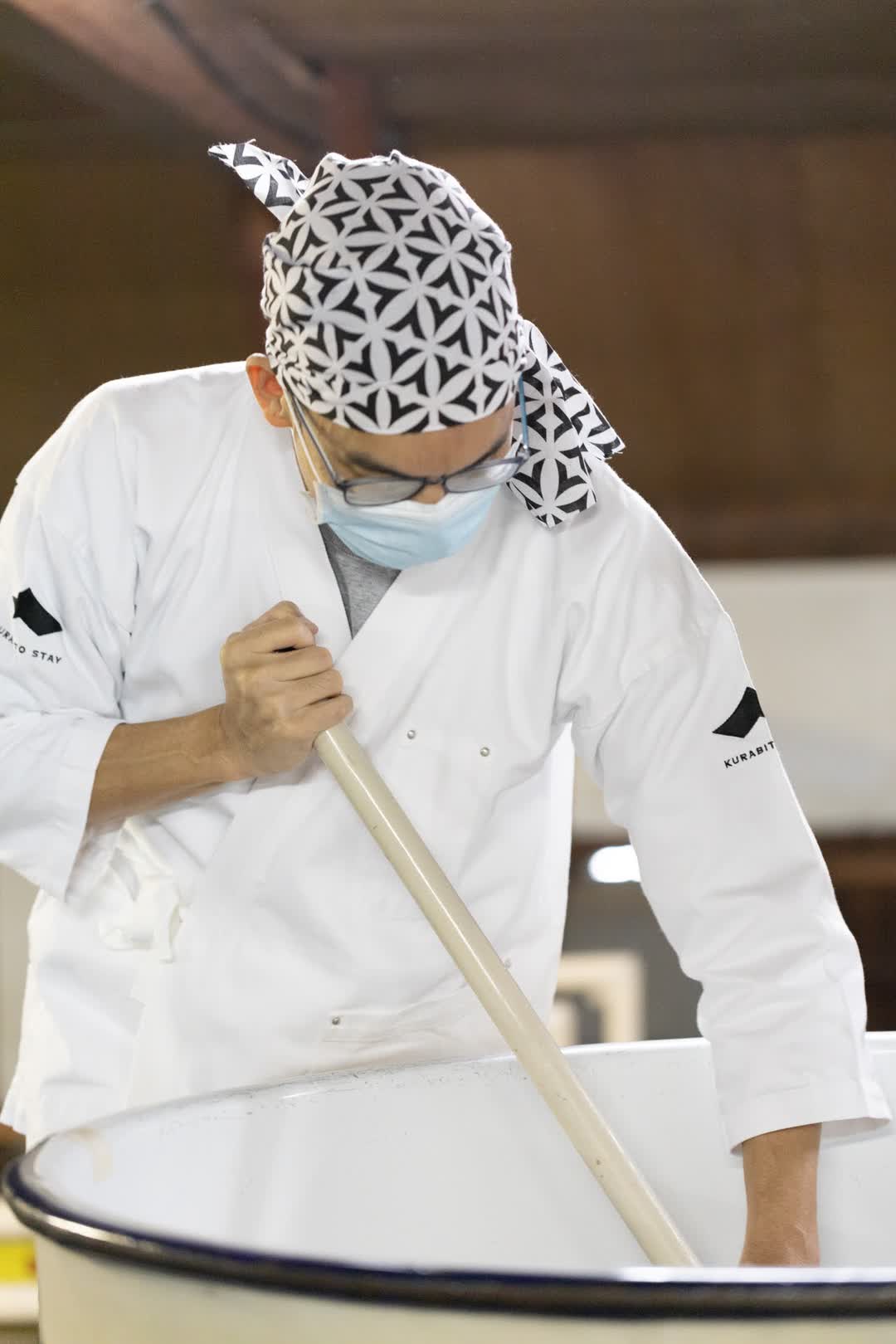
Stirring the tank with the kai. Slow, even, and heavier than it looks.
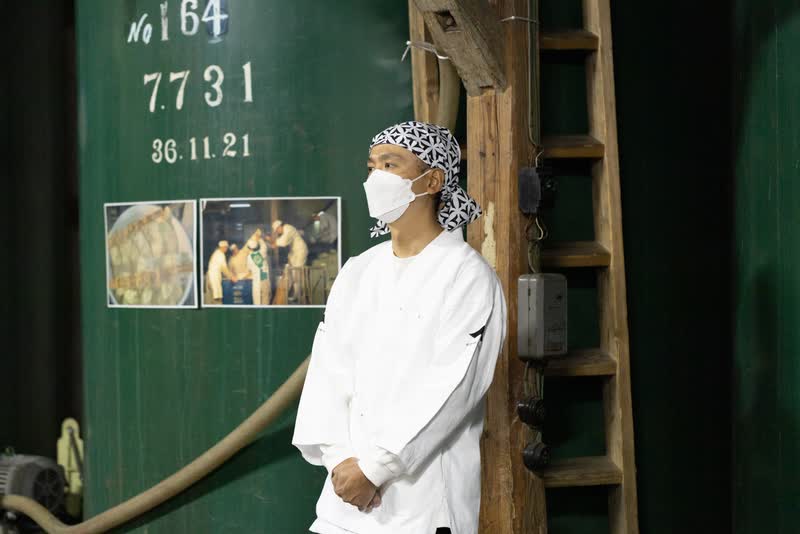
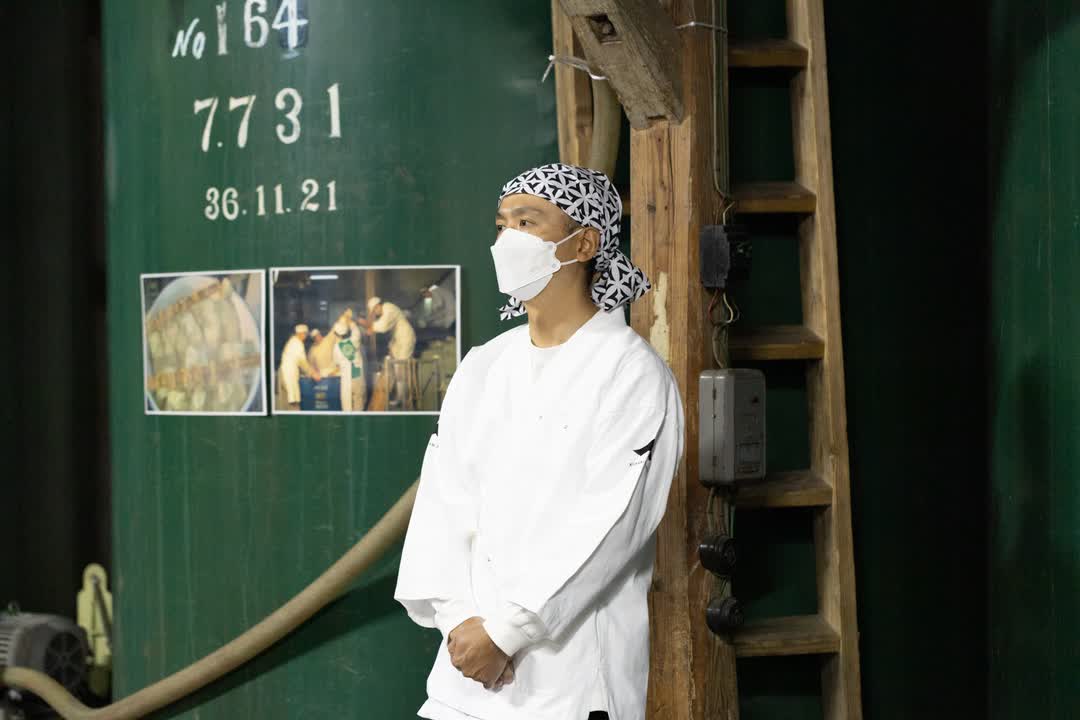
Tank 164. The moromi in it fermented for weeks after we left; my part ended when the shubo was made.
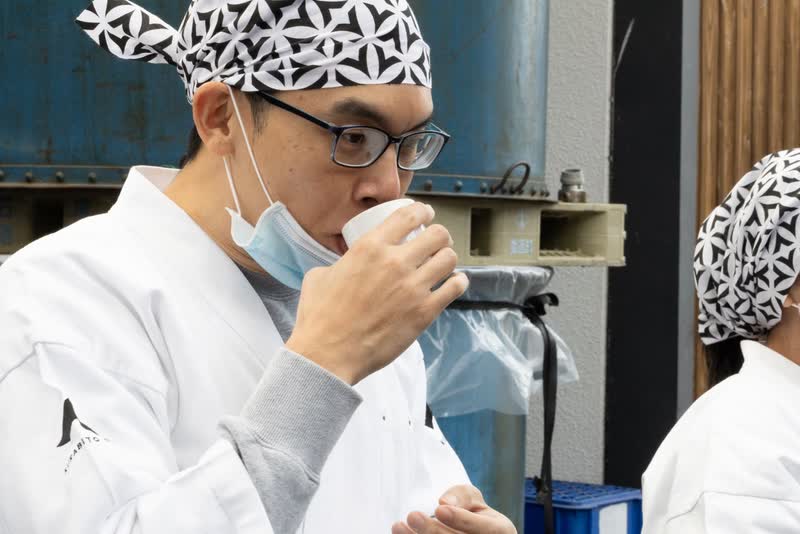
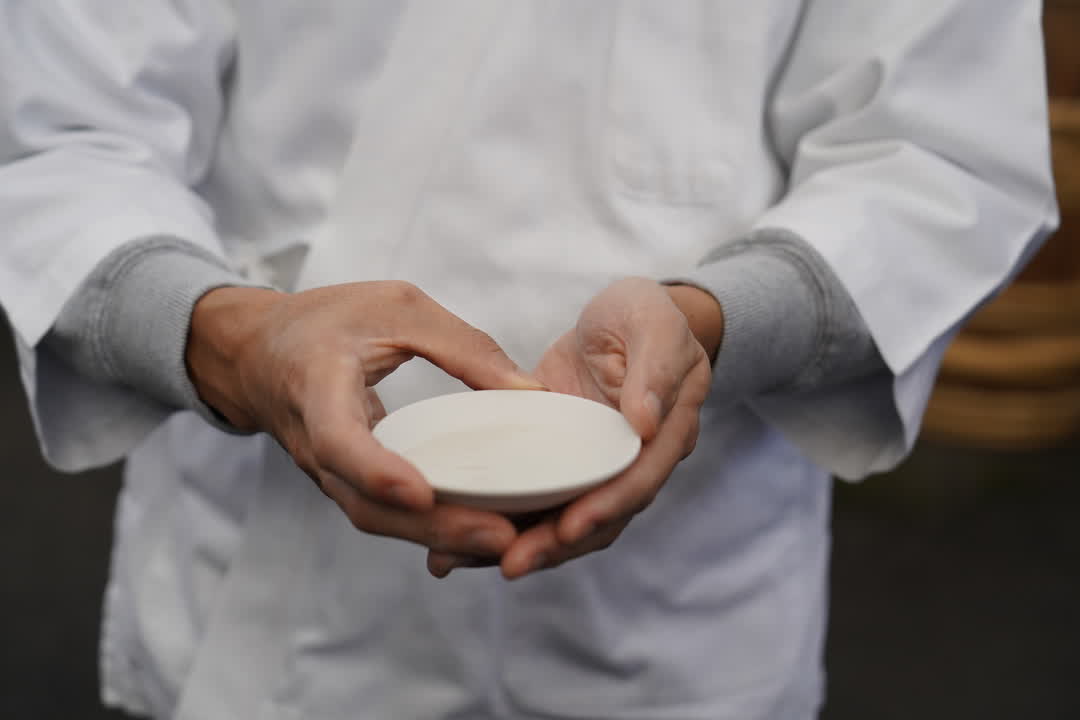
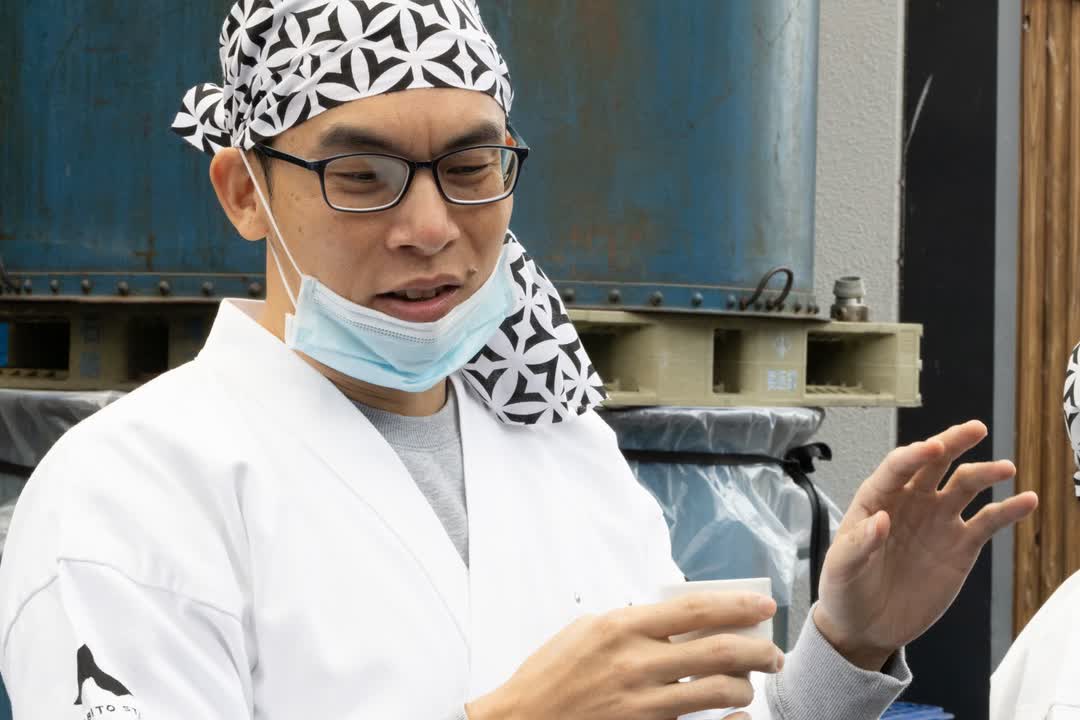
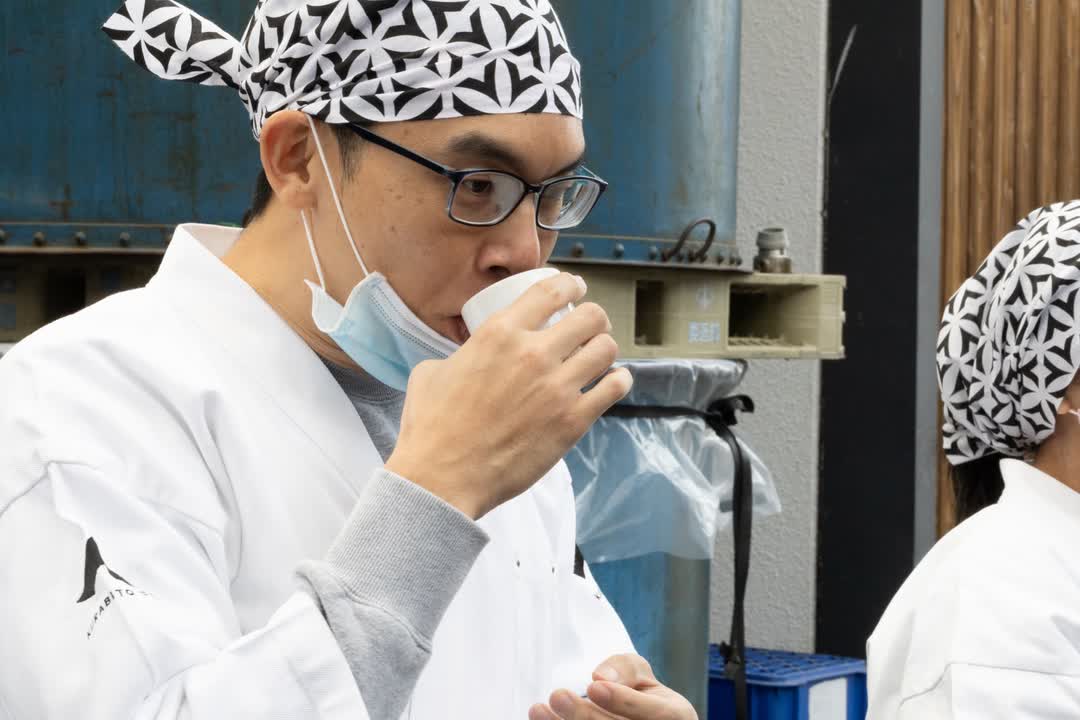
Kitsukura’s own, from the ochoko, at the end of the day. Every glass is the work of many hands.
Three days, frame by frame · 21–23 October 2022
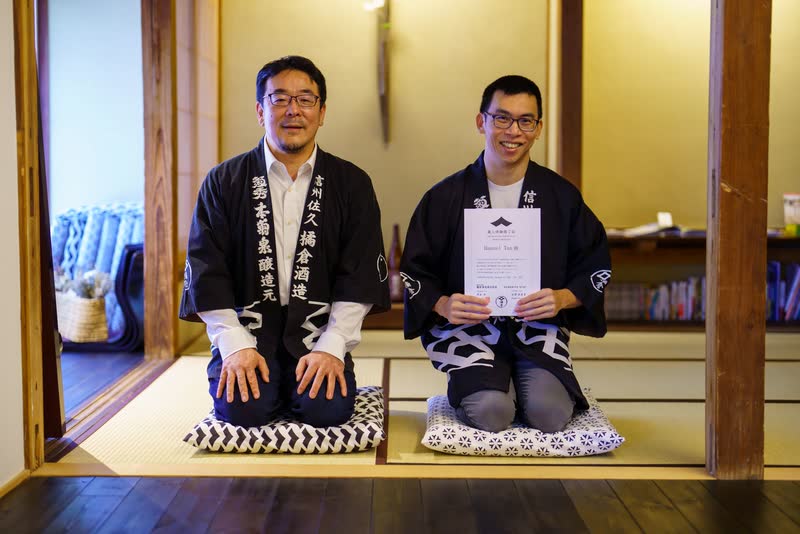
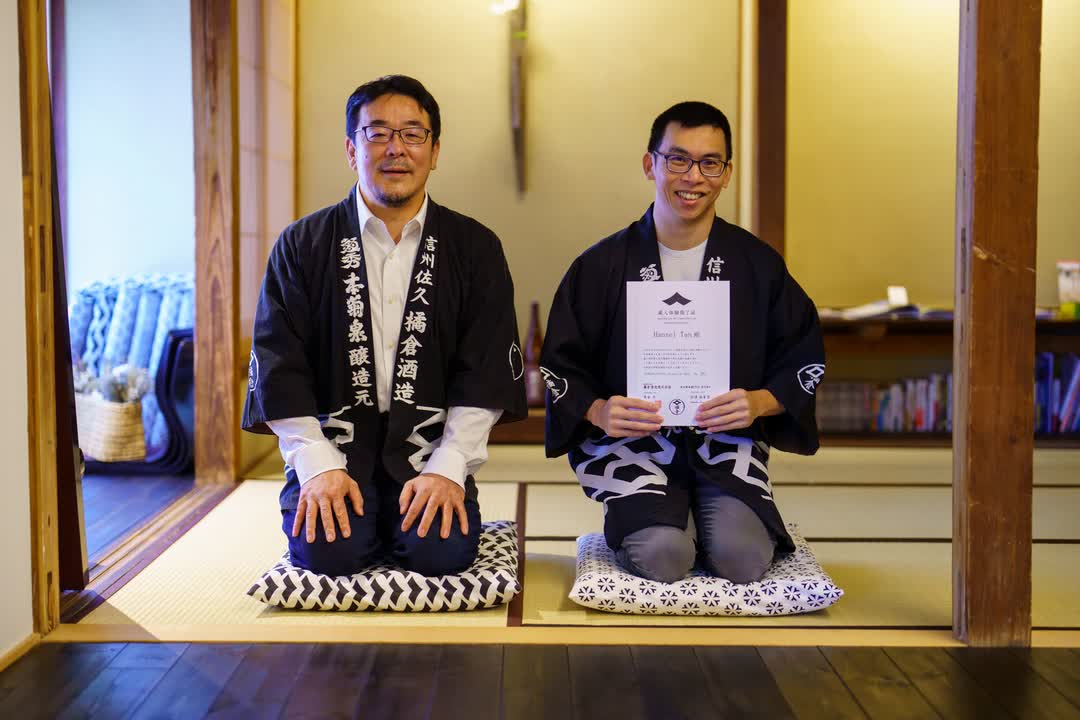
“Let’s continue to work together.”
Sake, explained from the rice up.